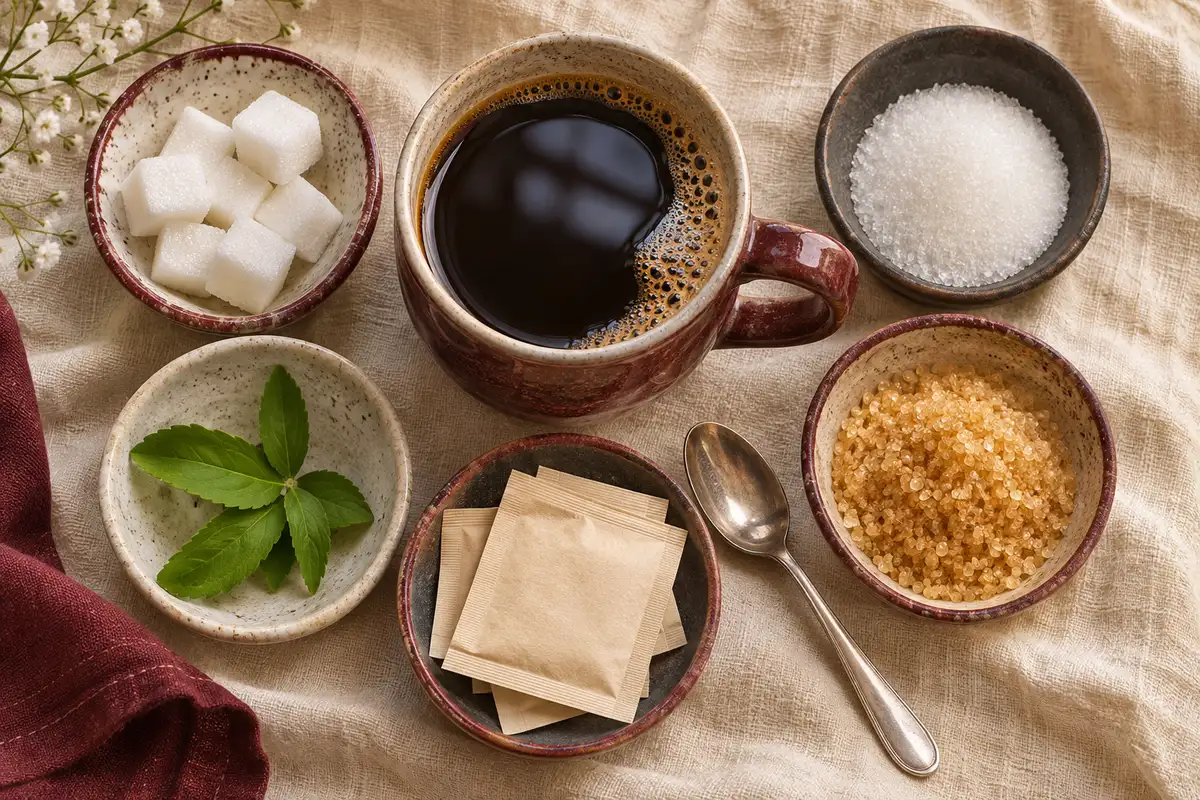
If you are cutting back on sugar, sweeteners look like the perfect shortcut: the sweet taste without the sugar. But “sugar-free” does not always mean “blood-sugar-free.” Some sweeteners barely register in your bloodstream; others raise glucose more than you would expect. Here is how the most common ones compare, and how to use them without undoing your progress.
The short answer
Most high-intensity sweeteners — stevia, monk fruit, sucralose and aspartame — do not meaningfully raise blood sugar on their own. Among sugar alcohols, erythritol and xylitol have little effect, while maltitol raises it noticeably. The bigger catch is usually not the sweetener but what comes with it: fillers in packets, and the flour, starch and fat in “sugar-free” cookies and desserts.
Sweeteners compared
| Sweetener | Type | Glycemic index (approx.) | Effect on blood sugar |
|---|---|---|---|
| Table sugar (sucrose) | Sugar | ~65 | Raises it |
| Stevia (Reb A) | Plant extract | 0 | Negligible |
| Monk fruit | Plant extract | 0 | Negligible |
| Sucralose | Artificial | 0 | Negligible on its own |
| Aspartame | Artificial | 0 | Negligible |
| Allulose | Rare sugar | ~0 | Very small |
| Erythritol | Sugar alcohol | 0–1 | Very small |
| Xylitol | Sugar alcohol | ~7–13 | Small |
| Maltitol | Sugar alcohol | ~35–52 | Moderate |
Approximate values from published glycemic index data; individual responses vary.
The hidden catches
- Fillers in packets. Many tabletop sweeteners are bulked with dextrose or maltodextrin, which are fast carbohydrates. A packet or two is a small amount, but it adds up across a day.
- “Sugar-free” foods still have carbs. Sugar-free cookies, chocolate and ice cream often contain flour, starch or maltitol. Read “Total carbohydrate,” not just “Sugars.”
- The sweet-taste habit. Constant intense sweetness can keep cravings alive. Many people find that cutting sweetness overall, as in a 7-day sugar reset, is what finally quiets them.
- Digestive comfort. Large amounts of sugar alcohols can cause gas, bloating or diarrhea.
- Ongoing research. Some studies are looking at how certain sweeteners interact with gut bacteria and insulin response, and a 2023 study linked high blood levels of erythritol with clotting risk. The findings are early and not conclusive; moderation is the sensible approach.
Pet safety
Xylitol is toxic to dogs, even in small amounts. Keep xylitol gum, candy, baked goods and any product that lists it (including some supplements and toothpastes) out of their reach.
How to use sweeteners wisely
- Use them as a bridgeSwap a sweetened soda for a zero-sugar version, then work toward sparkling water with lemon.
- Pick simple ingredient listsPure stevia, monk fruit or allulose rather than blends bulked with dextrose.
- Judge the whole foodA “keto” brownie is still a brownie. Check total carbs and portion size.
- Test your own responseIf you use a glucose meter, check one and two hours after a new “sugar-free” food.
- Keep sweetness occasionalThe less often you eat very sweet foods, sweetened or not, the fewer cravings you will have.
Already seeing high readings or symptoms like constant thirst? See high blood sugar symptoms in adults for what to watch and when to call your doctor.
Our recommendation: Sugar Reset
Good news if you are watching sweeteners: Sugar Reset, the daily blood sugar support we recommend, contains no added sugar. Sugar Reset is sweetened with stevia (Reb A) and a small amount of xylitol — two of the low-impact options in the table above — with organic lemon extract for a light, pleasant taste. Each dropper delivers chromium picolinate plus a 22-ingredient blend with gymnema leaf, the traditional “sugar destroyer” known for quieting sweet cravings, along with African mango, green tea, maca and Panax ginseng. One or two droppers each morning, made in the USA.
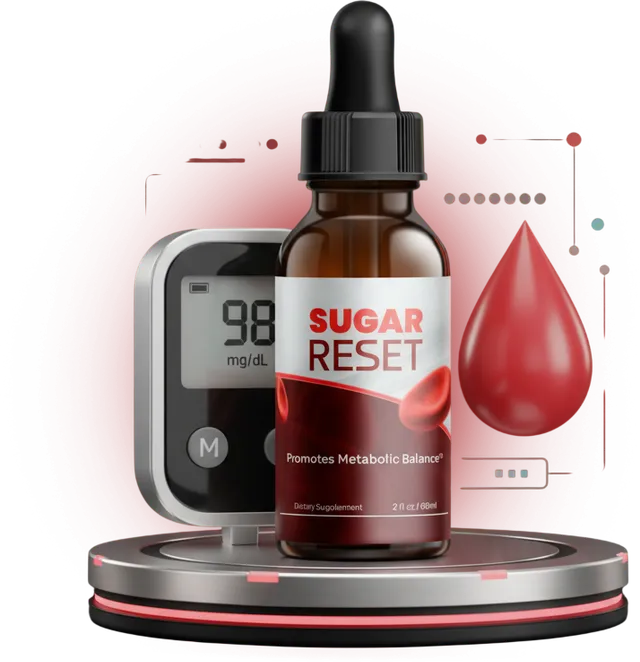
The best value is the 6-bottle package at $49 per bottle ($294, free shipping); 3 bottles are $69 each ($207, free shipping) and 2 bottles $79 each. One-time payment, no subscription, 60-day money-back guarantee. Keep the bottle away from dogs because of the xylitol, and if you take medication for blood sugar, show the label to your doctor first.
Want sweet-craving support without the sugar? Get Sugar Reset from the official site.
Frequently asked questions
Does stevia raise blood sugar?
Pure stevia extracts (steviol glycosides such as Reb A) contain essentially no carbohydrate and do not meaningfully raise blood sugar. Some powdered stevia blends add dextrose or maltodextrin as fillers, which can, so check the ingredient list.
Does sugar alcohol raise blood sugar?
It depends on which one. Erythritol has almost no effect and xylitol a small one, while maltitol raises blood sugar noticeably, about half as much as table sugar. Large amounts of most sugar alcohols can also cause bloating or diarrhea.
Is allulose good for blood sugar?
Allulose is a rare sugar that the body mostly does not use for energy, so it has very little effect on blood glucose. The FDA lets manufacturers leave it out of the “added sugars” count on labels.
Are sweeteners good for weight loss?
The evidence is mixed. In 2023 the World Health Organization advised against using non-sugar sweeteners as a main strategy for weight control, because long-term studies did not show lasting benefit. They are best used as a bridge while you get used to less sweetness overall.
This article is for general information only and is not medical advice. Dietary supplements are not intended to diagnose, treat, cure or prevent any disease. Talk to your doctor before changing your diet, exercise or supplements, especially if you take medication.